

Can Ear Wax Cause Dizziness? Causes, Signs and When to Get Help
Feeling off balance, light-headed or as if the room is spinning can be unsettling, and it's a question we're often asked in clinic: can ear wax cause dizziness? The short answer is yes, it can, although it's far from the most common reason people feel dizzy. In this guide we explain how a build-up of ear wax may affect your balance, what else can cause dizziness, the warning signs that need urgent help, and when professional ear wax removal is likely to make a difference.
We're Littleborough Ear Care, an ear wax removal clinic on Church Street in Littleborough, near Rochdale. Our practitioner, Stuart White, is a fully trained, insured and qualified audiologist with five years' experience of ear wax removal.
Can ear wax cause dizziness? What the evidence says
The NHS includes vertigo, which it describes as feeling dizzy and sick, in its list of earwax build-up symptoms, alongside hearing loss, earache or a blocked feeling, and ringing or buzzing in the ears (tinnitus). So if your ears feel blocked and you've also been feeling dizzy, wax is a reasonable thing to rule out.
That said, ear wax is rarely the whole story. Clinical references point out that not every expert agrees wax is a direct cause of true vertigo, and dizziness has many other possible causes. Where wax is to blame, UK health guidance expects symptoms to usually improve once the excess wax has been removed.
Signs your dizziness might be linked to ear wax
Dizziness caused by wax rarely turns up on its own. You're more likely to notice it together with other tell-tale signs, such as:
a muffled or blocked feeling in one or both ears
hearing that seems duller than usual, especially on one side
ringing, buzzing or other sounds in the ear (tinnitus)
itching or mild discomfort in the ear canal
a history of wax problems, or regular use of hearing aids or earbuds. NICE notes that excess earwax is especially common in older adults and people who use hearing aids or earbud-style earphones.
If several of these sound familiar, our guide to the 7 signs you need professional ear wax removal goes into more detail.
Other common causes of dizziness and vertigo
Most dizziness has nothing to do with wax. According to the NHS guidance on vertigo, inner ear problems that affect your balance are the most common causes. These include:
benign paroxysmal positional vertigo (BPPV), where certain head movements trigger brief spells of spinning
labyrinthitis, an inner ear infection often brought on by a cold or flu virus
vestibular neuritis, inflammation of the nerve that carries balance signals to the brain
Migraine, hormone changes such as the menopause and some medicines can also cause vertigo, and sometimes no cause is found at all.
This is why we always examine your ears before doing anything. If there's no wax that needs removing, we'll tell you, and you'll only pay a £20 assessment fee rather than the full treatment price. Either way, you'll leave knowing whether wax is a likely culprit or whether it's worth speaking to your GP about other causes.
When dizziness needs urgent medical help
Please don't wait for an ear wax appointment if your dizziness comes with any warning signs. NHS advice is to ask for an urgent GP appointment or contact NHS 111 if you have vertigo along with a severe headache, you're being sick or feel very sick, or you have a very high temperature or feel hot and shivery.
Call 999 or go to A&E if vertigo comes with double vision or loss of vision, hearing loss, difficulty speaking, or weakness, numbness or tingling in an arm or leg. Sudden hearing loss in one ear should also be checked by a doctor promptly rather than booked in for wax removal.
How professional ear wax removal can help
If your symptoms do point to wax, removing it professionally is usually quick and straightforward. NICE guidance (NG98) recommends removing earwax when it's contributing to hearing loss or other symptoms, and advises against old-style manual syringing in favour of methods such as electronic irrigation or microsuction. We offer both:
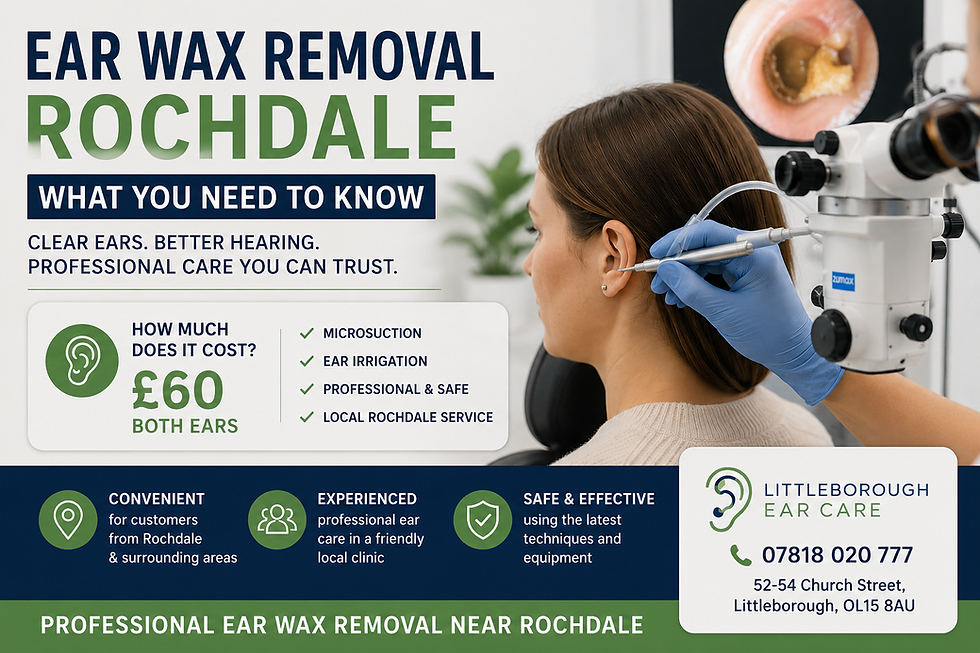
Microsuction: a gentle suction device lifts the wax out while we view the ear canal under magnification, with no water involved.
Irrigation: a controlled, low-pressure flow of water washes the wax out. It's the modern, better-controlled successor to traditional ear syringing.
Both cost £60 for both ears. We'll recommend the method that suits your ears and medical history, because irrigation isn't suitable for everyone, for example if you've had a perforated eardrum or ear surgery. You can read more about what happens during microsuction and how safe it is.
Can you feel dizzy after ear wax removal?
Some people feel briefly light-headed or a little unsteady during or just after treatment. In one published study of patients having microsuction in a hospital ENT clinic, just over half reported a side effect, but these were mostly minor and short-lived, with dizziness among the most common. We take things at your pace, and you're welcome to sit for a few minutes before heading off. If dizziness is severe or doesn't settle, contact your GP or NHS 111.
Preparing for your appointment
Unless you've been told not to use ear drops, we generally recommend an olive oil spray such as Earol, twice a day for 2 to 3 days before your appointment, to soften the wax. Don't use drops if you have, or think you may have, a perforated eardrum, and avoid cotton buds, which tend to push wax further in.
If your hearing still doesn't feel right once the wax is out, we also offer hearing tests at our Littleborough clinic.
Visiting us from Rochdale and the surrounding area
You'll find us at Church St Business Centre, 52–54 Church Street, Littleborough, OL15 8AU. We see people from right across Littleborough and Smithy Bridge, Rochdale, Wardle, Milnrow, Newhey, Todmorden and Walsden.
Frequently asked questions
Can ear wax in one ear make you dizzy?
It can. A blockage on one side may leave you feeling off balance, often alongside muffled hearing in that ear. Other conditions can cause one-sided symptoms too, so it's sensible to have your ears examined rather than assume it's wax.
Will removing ear wax stop my dizziness?
If wax was the cause, symptoms usually improve once the excess wax has gone. If your dizziness carries on afterwards, see your GP: NICE suggests that vertigo which hasn't fully settled or keeps coming back may need assessment by an ear, nose and throat specialist.
Should I try to clear the wax myself first?
Please don't. The NHS advises against using fingers or objects such as cotton buds, as they can push wax deeper and make a blockage worse. Softening drops or an olive oil spray are fine for most people.
How much does ear wax removal cost?
£60 for both ears, whether you have microsuction or irrigation. If we examine your ears and there's no wax that needs removing, you'll only pay the £20 assessment fee.
Book your ear wax removal appointment
If you're feeling dizzy alongside blocked or muffled ears, we'd be happy to take a look. Book your appointment online, or call, text or WhatsApp us on 07818 020 777. You can also email help@littleboroughearcare.co.uk or send us a message through our contact page.
This article is general information, not a diagnosis. If you have sudden hearing loss, severe pain, discharge from the ear or dizziness, please contact your GP or NHS 111.


Comments